JPMorgan Chase Unveils Fixed Income Experience and Bond Trading Tools on Mobile App
JPMorgan Chase has unveiled new features on its Chase Mobile app, including a fixed income experience that enables retail investors to research and purchase...
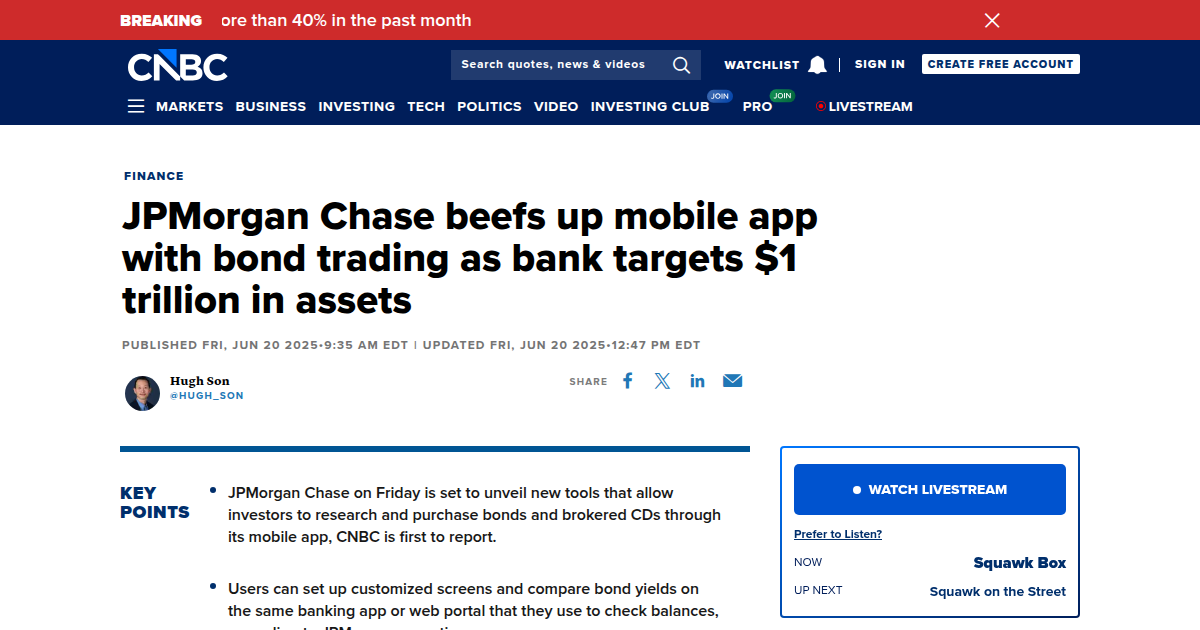
JPMorgan Chase has unveiled new features on its Chase Mobile app, including a fixed income experience that enables retail investors to research and purchase corporate bonds and Treasury securities directly through the mobile platform.
The bond trading tools represent a significant expansion of the app's investment capabilities, bringing a traditionally institutional asset class to retail customers. Chase customers can now browse available bonds, view yields and maturity dates, and execute purchases alongside their existing equity trading and banking activities.
The fixed income experience is designed with retail accessibility in mind, presenting bond information in a simplified format that does not assume the specialised knowledge typically associated with fixed income investing. The app provides educational content alongside the trading functionality to help customers understand bond investing fundamentals.
The launch comes at a time of heightened retail interest in fixed income products, driven by elevated interest rates that have made bonds more attractive to individual investors. JPMorgan is capitalising on this demand by making bond access as straightforward as equity trading within its mobile app.
JPMorgan Chase's investment platform has been growing rapidly, with the bank adding features that position its app as a comprehensive wealth management tool rather than just a banking interface. The addition of bond trading alongside existing equity trading, robo-advisory, and savings products deepens the app's value proposition.
The mobile-first approach to bond trading could expand the retail investor base for fixed income products, which have historically been underrepresented in individual portfolios due to accessibility barriers.