Standard Chartered Launches Digital Asset Custody Service in the UAE
Standard Chartered has launched a digital asset custody service in the UAE after receiving a licence from the Dubai Financial Services Authority, offering...
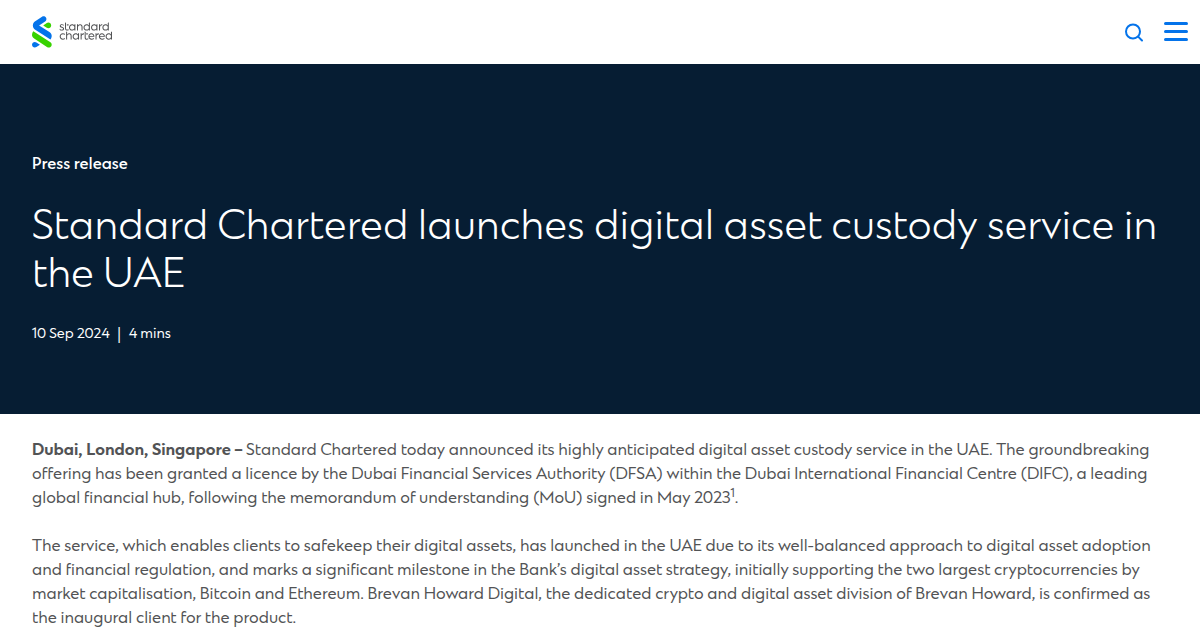
Standard Chartered has launched a digital asset custody service in the UAE after receiving a licence from the Dubai Financial Services Authority, offering institutional clients regulated safeguarding of digital assets.
The service enables institutional investors, asset managers, and corporate clients to securely store digital assets including cryptocurrencies and tokenised securities through Standard Chartered's custody infrastructure. The bank said the offering is designed to meet the security, compliance, and reporting standards that institutional clients require before allocating to digital asset classes.
Standard Chartered's custody service operates under the regulatory framework established by the DFSA within the Dubai International Financial Centre. The licence provides clients with the assurance of a regulated environment overseen by a recognised financial services authority, addressing one of the primary concerns that has deterred institutional participation in digital asset markets.
The launch positions Standard Chartered as one of a small number of global banks offering digital asset custody in the UAE, where the regulatory environment for digital assets has been developing rapidly. Dubai has established itself as a hub for digital asset businesses, with the Virtual Assets Regulatory Authority (VARA) and the DFSA both creating licensing frameworks.
Standard Chartered has been building its digital asset capabilities over several years, including investments in blockchain payment infrastructure through its participation in the Partior network. The custody service adds a critical piece to this strategy, as institutional investment in digital assets requires reliable, regulated custody solutions.
The UAE's growing digital asset ecosystem is expected to attract further institutional participation as regulated custody and trading services become more widely available.