US Senate confirms Kevin Warsh as Federal Reserve chair in 54-45 vote
The United States Senate has confirmed Kevin Warsh as the next chair of the Federal Reserve in a 54-45 vote, ending months of speculation over who would succeed Jerome Powell. The mostly party-line tally saw Pennsylvania Democrat John Fetterman cross the aisle to join every Republican senator in support.
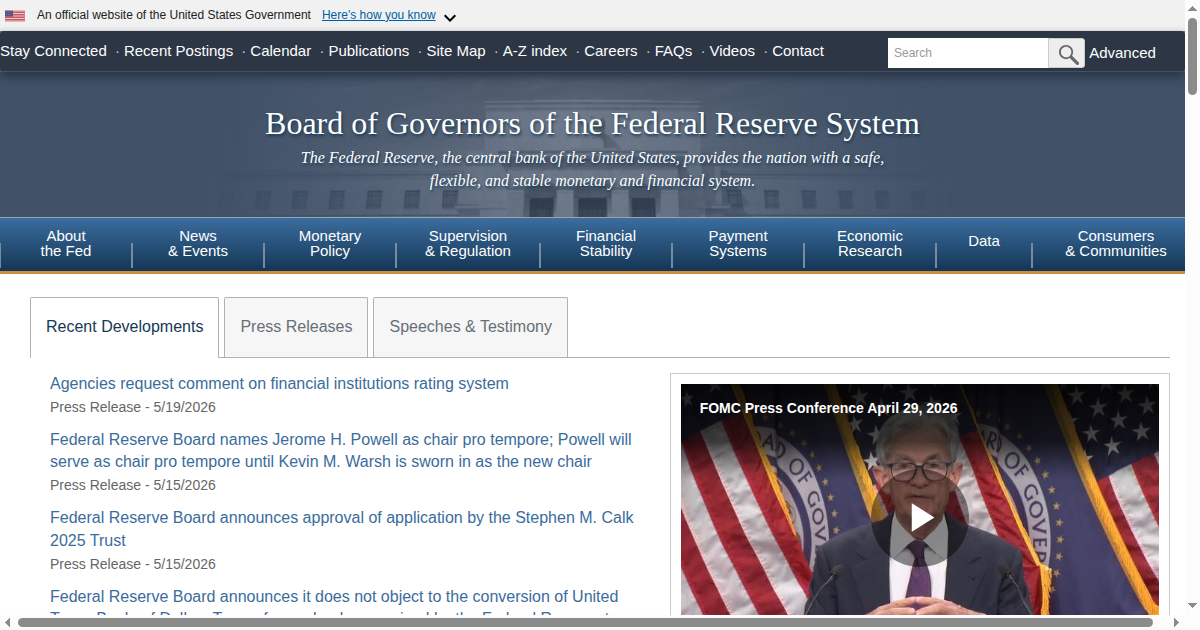
Warsh's term as chair will run through 2030. He takes over two days before Powell's chairmanship expires; Powell remains a Fed governor through January 2028 but has signalled he will "keep a low profile" for the remainder of his term.
Warsh is not a new face at the Fed. He served on its Board of Governors from 2006, appointed at age 35 as the youngest governor in the central bank's history. Before that he was an investment banker at Morgan Stanley. During the 2007-08 financial crisis he played a central role in arranging the government capital infusions that recapitalised the US banking system. He was a finalist for the chair role in 2017, losing to Powell.
The political backdrop is the contested issue of central bank independence. President Trump has been vocal in demanding lower interest rates, at one point joking that he would sue Warsh if rates did not come down. Warsh has himself called for "regime change" at the central bank, while telling senators at his April nomination hearing that Trump "never, generally or specifically, instructed me" on rate commitments and that he takes "the integrity of the office and my personal integrity very seriously."
Senator Elizabeth Warren was blunter in opposition. "Warsh's confirmation = another step in Trump's attempt to take over the Fed," she said, accusing the administration of trying to "install sock puppets at the Federal Reserve Board." Fetterman, defending his vote, said Warsh "will be transparent and responsive to Congress and the public." The American Bankers Association praised his "deep experience" and "steady hand", and the White House described the confirmation as "a welcome step towards finally restoring accountability."
The Senate also voted on Tuesday to seat Warsh on the Fed board itself, displacing governor Stephen Miran, who had consistently advocated for lower rates during his tenure.
The first real test for the new chair is the FOMC meeting on 16-17 June. That decision, and the press conference that follows, will be the clearest signal yet of whether Warsh intends to chart a different rate path from his predecessor or hold the Fed's existing line under political pressure. For banks, the question is not just where rates settle but whether the institutional independence that has anchored US monetary policy for four decades survives the next four years intact.