Ant International Raises $1.2bn Series A to Scale Its Cross-Border Network
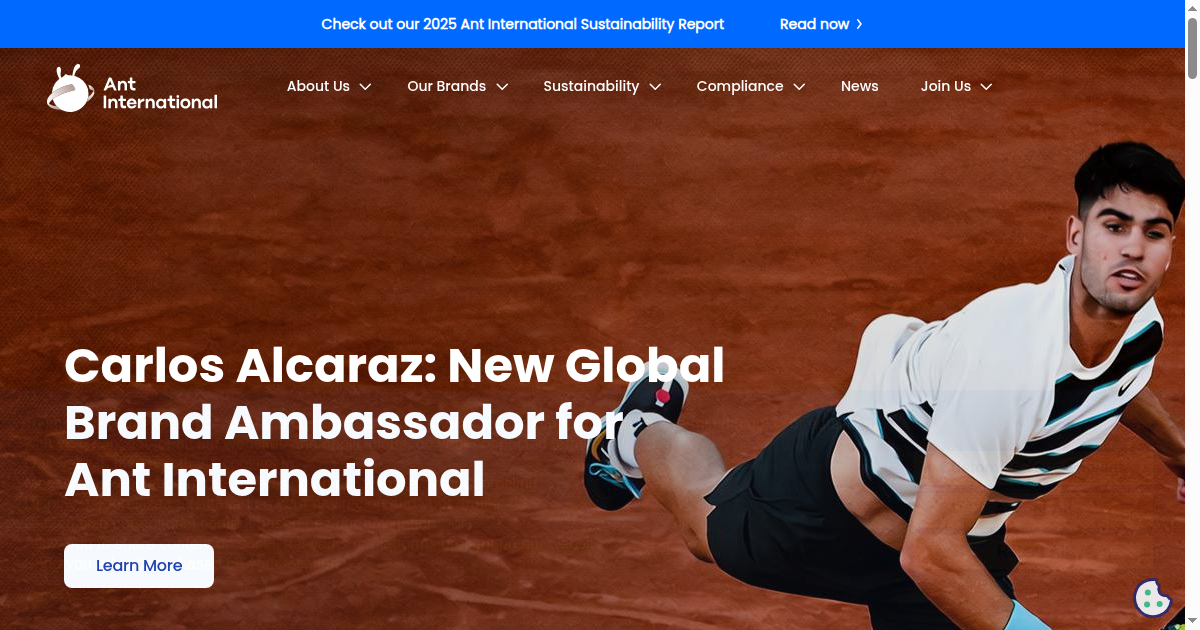
Ant International, the global arm of Jack Ma-founded Ant Group, has closed a Series A equity financing round of approximately $1.2bn, with existing investors including Ant Group and Alibaba Group participating alongside other international institutions. The company disclosed the round in a brief statement reported by Electronic Payments International on 21 July, without breaking out individual investment sizes. Reuters put the company's pre-money valuation at $10bn.
Calling a $1.2bn raise a Series A is not a quirk of labelling. Ant International began operating independently in 2024, carved out of Ant Group as a separate entity with its own capital structure, and this is the first external equity round that structure has taken. The round therefore functions less as growth capital in the conventional sense than as the pricing event that establishes Ant International as a standalone business with its own investor register.
The proceeds are directed at accelerating global expansion and at product development across merchant payment, account management and other financial services aimed at SME and enterprise customers. The company operates through four business lines: Alipay+, its cross-border wallet interoperability network; Antom, its merchant payment and digitisation arm; WorldFirst, the business account and cross-border collection platform; and Bettr, its embedded finance unit.
The scale claims are the reason banks should pay attention. Ant International says it has built a partnership network spanning banks, card organisations, mobile payment operators and technology firms across Asia, Europe, the Middle East and Latin America, connecting over 150 million merchants with more than two billion user accounts. Those figures describe a payments network with reach comparable to the card schemes, assembled without issuing a card or, in most markets, holding a banking licence.
The Alipay+ model is what makes that possible, and it is structurally different from how the card networks expanded. Rather than issuing its own instrument into each new market, Alipay+ connects existing domestic wallets and QR schemes to one another, so a traveller's home wallet works at a foreign merchant through a translation layer rather than through a new relationship. The recent integration with Argentina's national QR payment scheme, Transferencias 3.0, delivered through a partnership with Latin America-focused FinTech PVS, is a clean example: international travellers gain QR acceptance across Argentina without Argentine merchants onboarding anything new.
That approach makes Ant International a beneficiary of domestic instant-payment infrastructure rather than a competitor to it. Central banks across Asia, Latin America and the Gulf have spent the past decade building national real-time rails and QR standards, largely with the explicit aim of reducing dependence on foreign card schemes. Those rails are effective domestically and almost universally weak on cross-border interoperability. Ant International's proposition is to supply the missing layer, which places it in the cross-border interchange pool that card networks currently occupy, while leaving the domestic economics with the local scheme.
The company has also moved early on agentic payments, introducing an Agentic Mobile Protocol intended to let merchants, large language model providers, AI platforms, agent builders and digital wallets add agentic payment functions to existing workflows without system overhauls. The interoperability-layer framing is consistent: a protocol that sits above incumbent systems rather than requiring their replacement, which is precisely the pattern that got Alipay+ into so many markets so quickly.
For banks in the corridors Ant International serves, the strategic question is whether to plug into the network or contest it. Connecting is straightforward and delivers immediate cross-border acceptance for customers, but it concedes the interoperability layer, and with it the cross-border transaction data and the relationship with the travelling customer, to a third party. The card schemes learned over several decades that whoever owns the layer between domestic systems captures the economics of everything that crosses it. Ant International has assembled that position in roughly two, and has now raised $1.2bn to consolidate it.